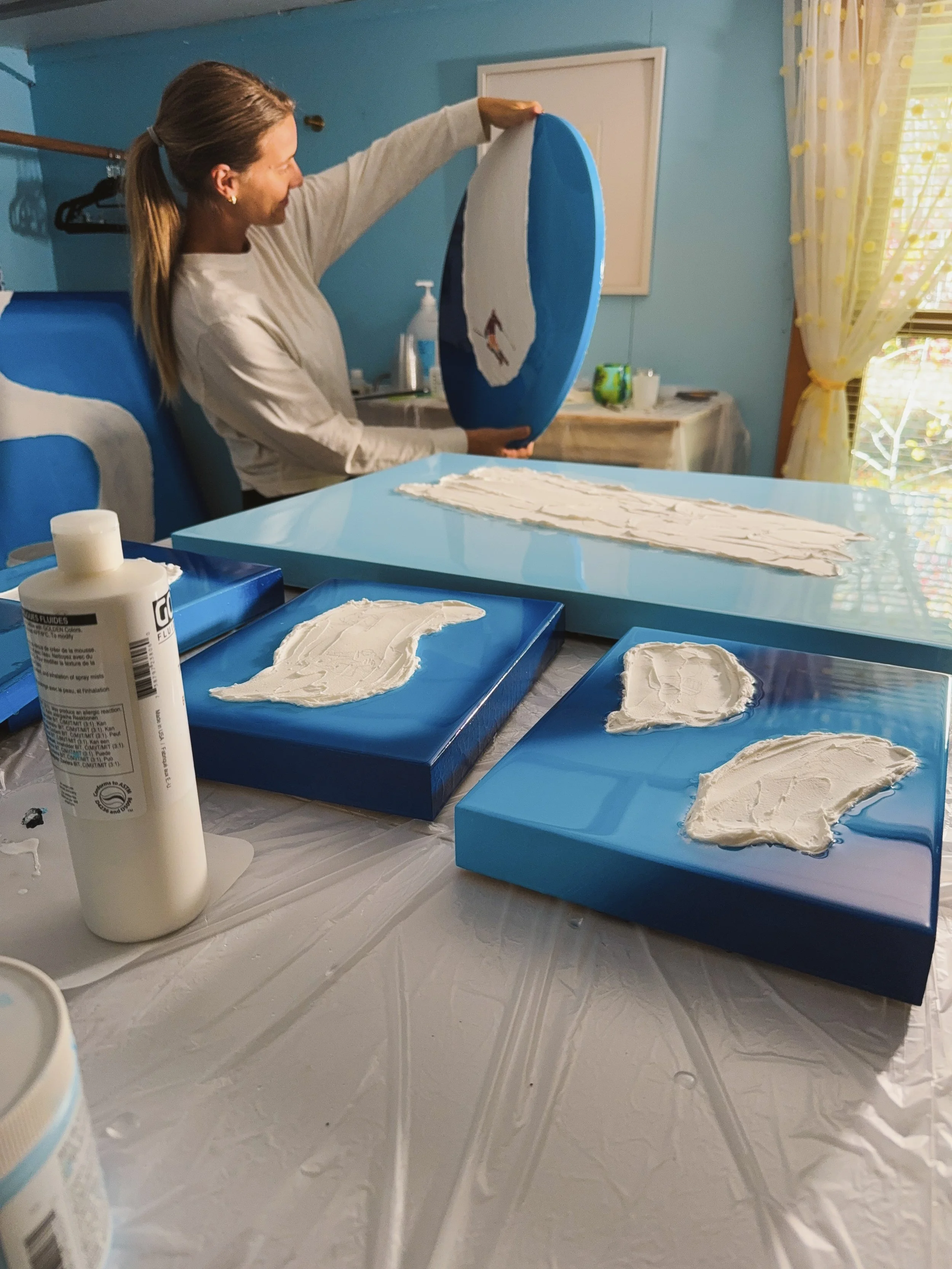
Travel Inspired Art: The Process Behind My Abstract Mountain Work
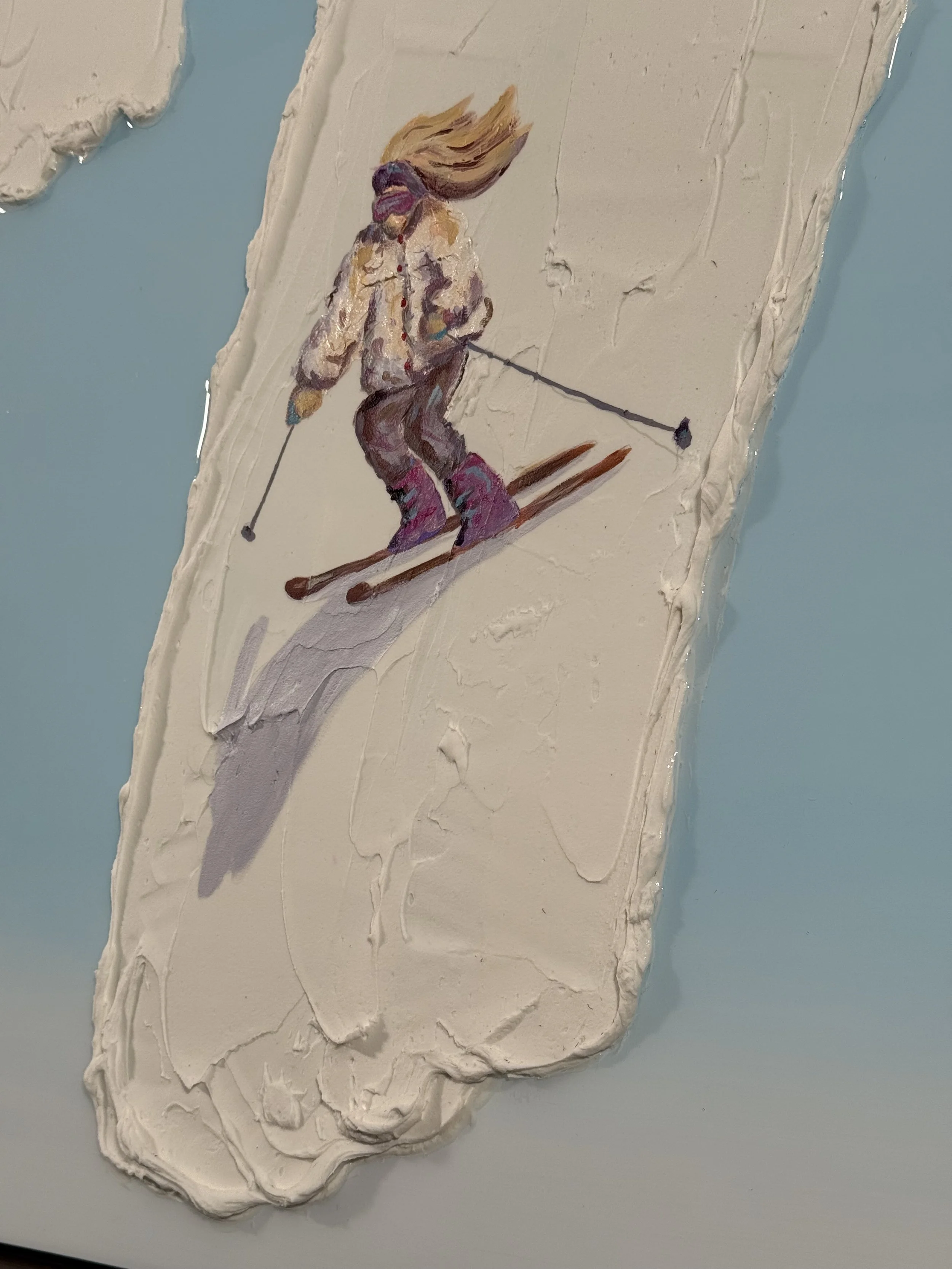
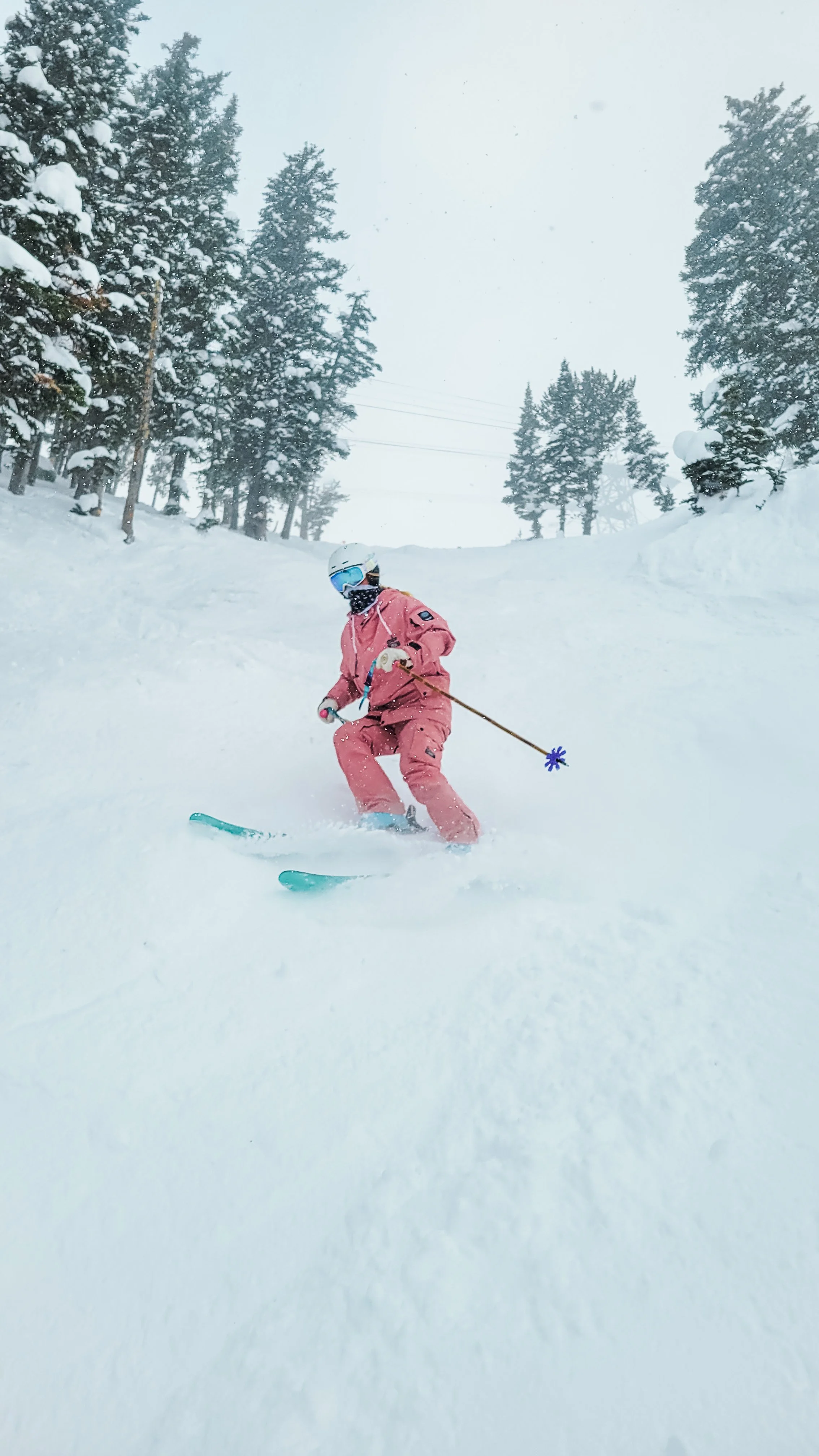
Travel is where my work begins but not where it ends. Here’s the thing, I’m not trying to document places as they look but rather bring a feeling that evokes what, say, a day in the Alps feels like. What stays with me instead are the quieter impressions: the light, the feeling of being closer to the clouds, the stillness that settles in after a big snowstorm. That’s the starting point for my abstract mountain work: not a location, but a feeling.
I always pay attention to how a place moves; I love seeing how different people interact in different places or while doing different activities. Those impressions quietly shape my collections. They influence scale, palette, and mood far more than any specific view ever could. Travel gives me the emotional framework which I then use to create something that evokes that feeling for viewers later.
This is why my work is deeply rooted in travel inspired art, even when it isn’t tied to one exact destination (although admittedly, this collection is very inspired by the Alps.)
from landscape to abstraction
Once I’m back in the studio, as I begin translating these feelings, mountains become outlines, snow gives subtle movement, skiers add layered depth. Instead of painting literal peaks or slopes, I use abstraction to suggest space and elevation. You might also notice that negative space matters just as much as texture, keeping the work feeling fresh.
That openness allows the art to feel expansive rather than fixed. More like a memory unfolding than a moment frozen in time.
why i avoid literal scenes
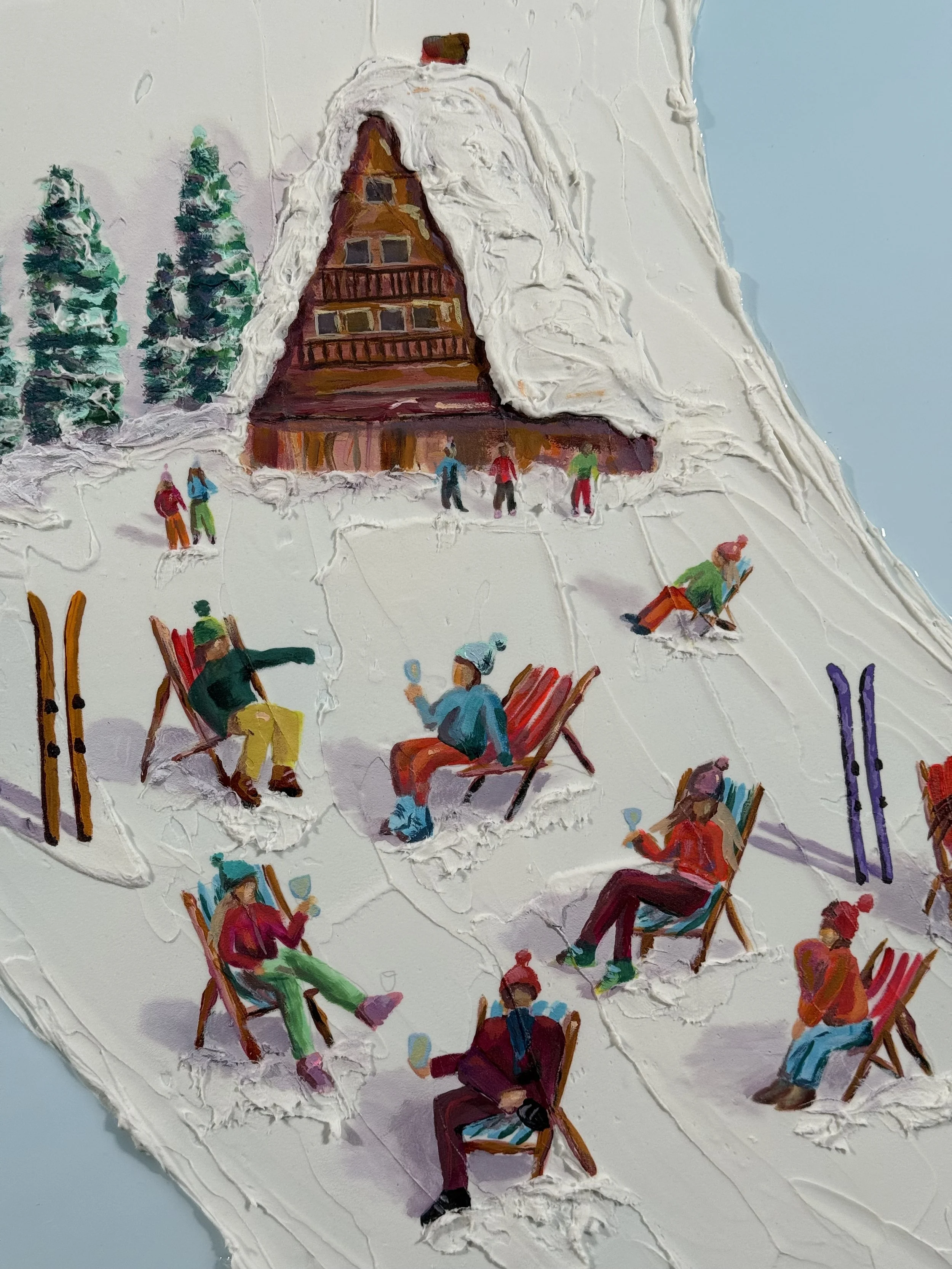
Literal landscapes can be beautiful, but they fix a piece to one story. I prefer leaving space for interpretation, allowing the viewer to bring their own memories, places, and feelings into the work. I think a lot of us have a favorite ski run, or a fave apres moment, and that’s what I want you to think about when looking at some of the work.
By staying abstract, the art becomes more timeless and adaptable, able to live in many different spaces without feeling tied to a single moment. That openness is what makes abstract mountain artwork feel personal to so many people.
color and texture as the real medium
All of the small details included in the creation of these pieces are what end up making them stand out. Colors soften around the edges into gradients, textures build and swoop in areas giving it movement. All of it creates a mood, one that isn’t chasing accuracy but chasing emotion.
Cool blues, soft whites, and muted neutrals feel like sky, snow, and solo moments. Texture becomes a way to recreate terrain and movement without spelling it out. Layering materials slows the experience of the work, encouraging people to step closer and spend time with it.
In many ways, memory, color, and texture are the real mediums I’m working with.
connecting collectors to place inspired art
Contemporary mountain artwork often represents calm, clarity, and escape, things many people are craving in their spaces. When art carries those qualities, it becomes more than visual. It becomes atmospheric.
It doesn’t demand attention, and I believe my collectors enjoy having that feeling in their home.
letting the Work Continue the Journey
Once a piece leaves the studio, my role shifts. The work moves into new spaces and the art begins to take on meanings beyond my own. It becomes part of someone else’s environment, their routines, and their everyday moments. That’s what I love most about this process. Travel starts the work, then it takes shape in my studio, and the final feeling moves forward, wherever it lands.